
Benefits of Prescribed Burns in Pennsylvania: How Controlled Fire Protects Forests
In our previous post, we explored why spring is peak wildfire season in Pennsylvania and how climate change is increasing wildfire risk. But there’s an important follow-up to that conversation:
Not all fire is bad.
In fact, when carefully planned and managed, fire can be one of the most effective tools for maintaining healthy forests and reducing wildfire danger.
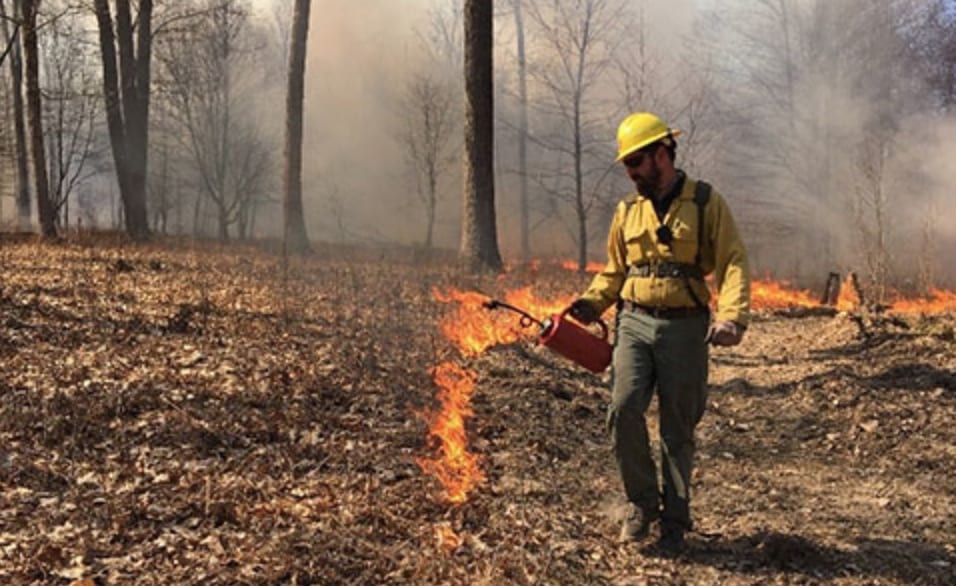
The Pennsylvania Department of Conservation and Natural Resources (DCNR) uses prescribed fire, also known as controlled burning, to safely and intentionally apply fire to the landscape for ecological benefits.
What Is a Prescribed Burn?
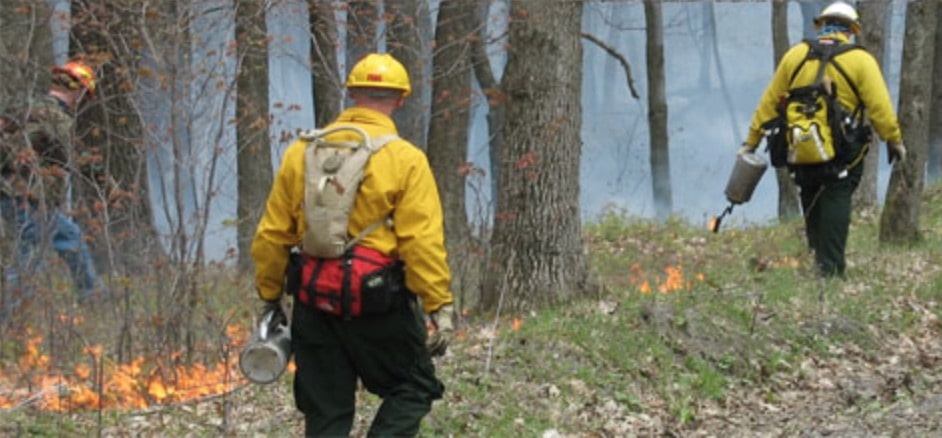
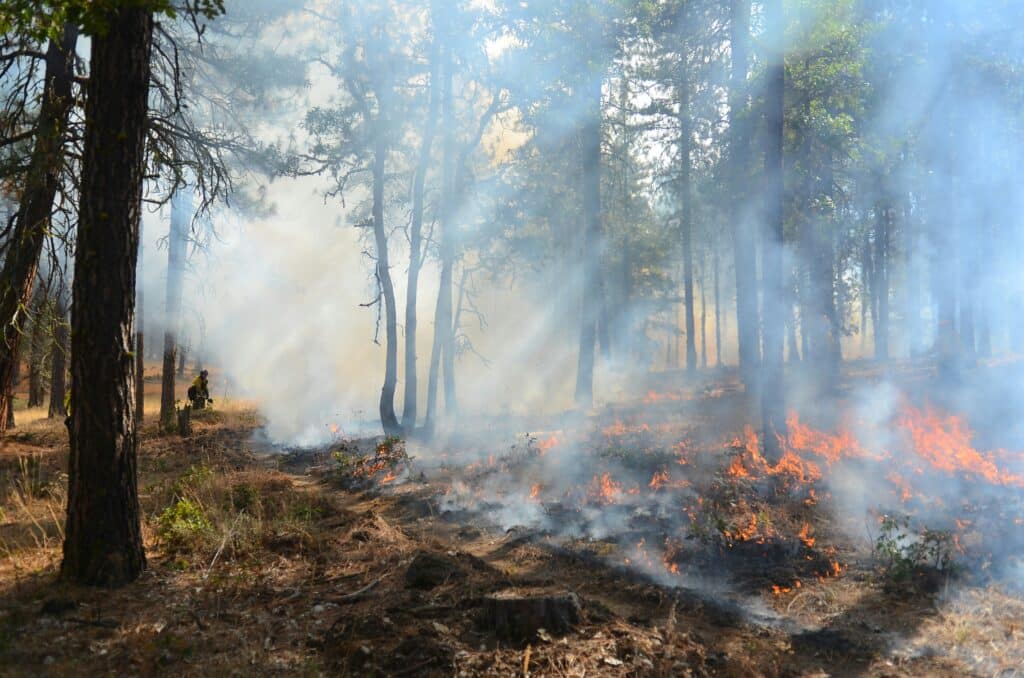
A prescribed burn is a planned fire conducted by trained professionals under carefully controlled conditions.
Unlike wildfires—which are unplanned and can threaten homes, communities, and natural resources—prescribed fires are:
- Conducted according to a detailed burn plan
- Managed by trained personnel
- Implemented only under specific weather and site conditions
- Carefully monitored before, during, and after the burn
Each burn plan must be reviewed and approved by a qualified “burn boss” before implementation, ensuring safety and effectiveness.
While prescribed fires can occur whenever conditions allow, most burns in Pennsylvania take place in the spring, with a smaller window in late summer and fall after leaf drop.
Why Prescribed Fire Matters
Historically, fire played a natural role in shaping Pennsylvania’s landscapes. Many ecosystems evolved with periodic fire, which helped maintain their health and diversity.
Today, prescribed burns mimic these natural processes but under controlled conditions that reduce risk and maximize benefits.
Key Benefits of Prescribed Burns
1. Promotes Forest Regeneration
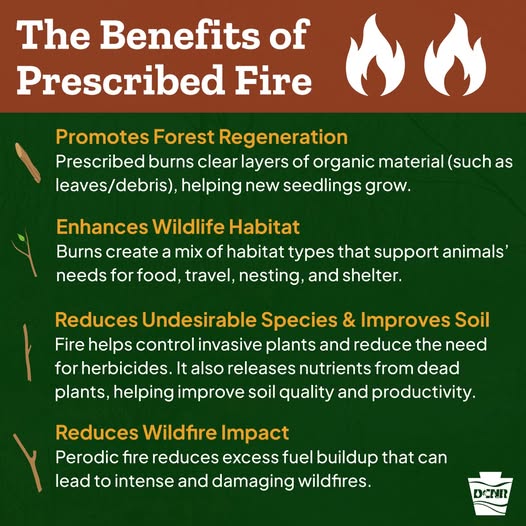
Over time, leaves, needles, and organic debris build up on the forest floor, creating a barrier that prevents seeds from reaching the soil. Prescribed fire clears this layer, allowing sunlight and nutrients to reach the ground and support new tree and plant growth.
2. Enhances Wildlife Habitat
Fire creates a diverse “patchwork” of habitats across the landscape. This mosaic provides different conditions for wildlife, which supports feeding, nesting, cover, and movement, and helps increase biodiversity across forest ecosystems.
3. Reduces Invasive and Undesirable Species
Certain invasive plants are less tolerant of fire than native species. Prescribed burns can help control invasive vegetation naturally, reducing the need for chemical treatments while giving native plants a competitive advantage.
4. Improves Soil Health
Fire releases nutrients stored in dead plant material, returning them to the soil in a more accessible form. This process can boost soil productivity and support healthier plant communities over time.
5. Decreases the Risk of Wildfires
One of the most important benefits of prescribed fire is reducing wildfire risk. By removing excess fuel—like dry leaves, brush, and dead wood—controlled burns help prevent the buildup that can lead to large, intense, and destructive wildfires.
The Science Behind Fire Management
Both wildfire suppression and prescribed burning rely on understanding how fire behaves.
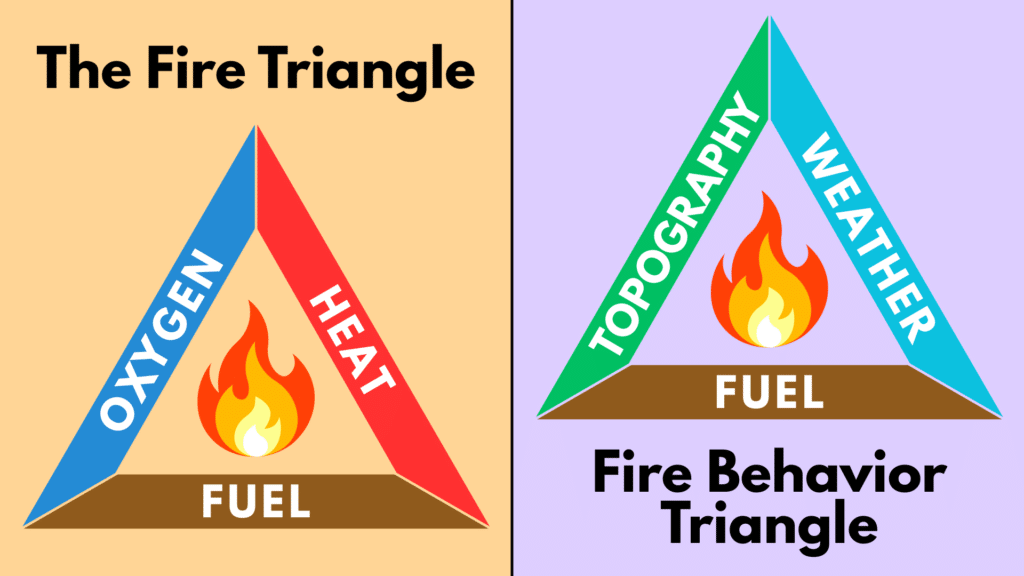
The Fire Triangle
Fire requires three elements:
- Oxygen
- Heat
- Fuel
Remove any one of these, and the fire goes out.
The Fire Behavior Triangle
How a fire spreads depends on:
- Topography: the shape and steepness of the land
- Weather: temperature, humidity, wind, and precipitation
- Fuel: the type, dryness, and arrangement of burnable materials
By carefully managing these factors, trained professionals can predict and control fire behavior during a prescribed burn.
Prescribed Fire on Private Lands in Pennsylvania
Prescribed burning isn’t limited to public lands.
Under the Prescribed Burning Practices Act (Act 17 of 2009), Pennsylvania has established clear standards for conducting prescribed fires on both public and private lands.
Key requirements include:
- Developing a detailed burn plan
- Using qualified personnel
- Notifying DCNR and the Department of Environmental Protection before the burn
To expand the use of prescribed fire, Pennsylvania introduced the Certified Prescribed Burn Manager (CBM) program in 2024, creating opportunities for landowners and professionals to safely conduct low-complexity burns.
Learn more through the PA Prescribed Fire Council: paprescribedfire.org
A Balanced Approach to Fire
The same environmental conditions that increase wildfire risk—dry fuels, warm temperatures, and wind—can also create opportunities for safe, carefully managed prescribed burns when conducted under strict guidelines.
This is one reason prescribed fires may sometimes occur during periods when the public is hearing about elevated wildfire danger or even regional burn restrictions. While that can seem contradictory, prescribed burns are fundamentally different from wildfires or uncontrolled outdoor burning.
Prescribed fires in Pennsylvania are conducted according to the Pennsylvania Prescribed Fire Standards and require extensive planning, trained personnel, and carefully monitored weather conditions. The Pennsylvania Department of Conservation and Natural Resources Bureau of Forestry must receive notification and a detailed burn plan before a prescribed fire can take place.
Highly trained firefighters use specialized equipment and only proceed when conditions fall within strict limits outlined in the approved burn plan. These plans identify:
- The exact burn boundaries
- The ecological or management objectives for the burn
- The minimum personnel and equipment needed to safely conduct the operation
Temperature, humidity, wind, and moisture levels are continuously evaluated before and during the burn to ensure conditions remain safe and predictable.
In many cases, prescribed burns are intentionally conducted during seasons when fuels will burn effectively, but still within a narrow window where fire behavior can be safely controlled. By reducing excess vegetation and fuel buildup under carefully managed conditions, prescribed fire helps lower the risk of larger, more dangerous wildfires later.
That distinction is critical.
By applying fire intentionally and responsibly, land managers can:
- Reduce wildfire risk
- Improve forest resilience
- Support wildlife and biodiversity
- Maintain healthier ecosystems across Pennsylvania
Learn More About Prescribed Fire
To learn more about prescribed burning and forest management, visit::
- PA DCNR Wildfire Prevention
- Pennsylvania Prescribed Fire Council
- PA DCNR Prescribed Wildfire Information Sheet
Prescribed fire is a powerful reminder that good forest stewardship isn’t about eliminating fire, it’s about using it wisely.
By understanding and supporting tools like prescribed burns, we can help ensure Pennsylvania’s forests remain healthy, resilient, and better protected from future wildfires.